NHS vs Private Dentistry – Which Is Better?

NHS vs Private Dentistry – Which Is Better?
The decision between NHS and private dentistry is a common dilemma for individuals seeking dental care in the UK. Both systems offer distinct advantages and disadvantages, influencing everything from cost and accessibility to treatment options and patient experience. Understanding these differences is crucial for making an informed choice that best suits your oral health needs, financial situation, and personal preferences. While the NHS aims to provide essential dental care for all, private practices often offer a broader range of services, enhanced flexibility, and advanced aesthetic options. This comprehensive guide will delve into the intricacies of each system, helping you navigate the complexities and determine which path is better for you.

Understanding NHS Dentistry
NHS dentistry operates on a tiered charging system, categorised into Bands 1, 2, and 3, which cover a wide range of essential treatments. The primary goal of NHS dental care is to provide treatments necessary to secure and maintain oral health, often focusing on preventative measures and addressing immediate issues. This includes examinations, diagnoses, scaling, fillings, root canal treatments, and the extraction of teeth. While the NHS offers a vital service, particularly for those on a limited budget, its scope is defined by clinical necessity rather than cosmetic desire.
Scope of NHS Treatments
NHS dental care is designed to be comprehensive for essential needs.
- Band 1 (£26.80): This covers an examination, diagnosis (including X-rays), advice on how to prevent future problems, and a scale and polish if clinically needed.
- Band 2 (£73.50): This includes all treatments covered by Band 1, plus additional treatments such as fillings, root canal treatment, or extractions.
- Band 3 (£319.10): This covers all treatments in Bands 1 and 2, plus more complex procedures like crowns, dentures, or bridges.
It is important to note that certain cosmetic treatments, such as teeth whitening or purely aesthetic veneers, are generally not available under the NHS unless there is a clear clinical need. The focus remains on maintaining basic oral health and function. For instance, a tooth filling will be provided if clinically necessary to restore function, but the material might be amalgam for back teeth, whereas private options might offer tooth-coloured composite fillings as standard.
Accessibility and Waiting Lists
One of the most significant challenges associated with NHS dentistry is accessibility. Finding an NHS dentist taking on new patients can be difficult in many areas of the UK, leading to long waiting lists for appointments, particularly for routine check-ups or non-urgent treatments. This can be frustrating for patients who require timely care or wish to establish a regular dental hygiene routine. Emergency care is usually prioritised, but even then, appointments can be scarce. The geographical lottery of NHS dental provision means that access can vary dramatically depending on where you live.
Exploring Private Dentistry
Private dentistry offers a stark contrast to the NHS system, providing a broader spectrum of services, enhanced flexibility, and a more personalised patient experience. While the costs are higher, patients often find that the benefits of choice, speed, and advanced treatment options outweigh the financial outlay. Private clinics are not constrained by the same budget limitations or service specifications as the NHS, allowing them to invest in cutting-edge technology, provide a wider range of materials, and dedicate more time to each patient.
Range of Private Treatments
Private dental practices typically offer an extensive array of treatments, encompassing both essential care and advanced cosmetic procedures. This includes:
- General Dentistry: Examinations, cleanings, advanced fillings (e.g., composite, ceramic inlays), root canal treatments using advanced techniques, and extractions.
- Cosmetic Dentistry: Teeth whitening, porcelain veneers, composite bonding, smile makeovers, and gum contouring.
- Restorative Dentistry: High-quality crowns (porcelain, zirconium), bridges, and dental implants.
- Orthodontics: A variety of brace options, including traditional metal braces, ceramic braces, lingual braces, and clear aligners (e.g., Invisalign).
- Specialist Services: Periodontal treatment for gum disease, endodontics (complex root canal therapy), and oral surgery.
The choice of materials and techniques in private dentistry is typically more advanced. For example, private patients often have access to digital X-rays with lower radiation, intraoral cameras for better visualisation, and advanced anaesthetic options for maximum comfort.
Cost and Payment Options
The cost of private dental treatment is determined by the individual practice and the complexity of the procedure. There are no fixed bands like the NHS; instead, each treatment has a specific fee. While this can seem daunting, many private practices offer various payment plans, including interest-free credit, pay-as-you-go options, and monthly membership schemes that can help spread the cost and make care more affordable. Dental insurance plans can also help offset private dental expenses. For many, the investment in private care is seen as an investment in long-term oral health and aesthetics.
NHS vs Private Dentistry – Which Is Better?
Deciding which system is superior is not a one-size-fits-all answer. The “better” option is highly subjective and depends on individual circumstances, priorities, and financial capacity. To help clarify the distinctions, the following table provides a direct comparison of key aspects:
| Feature | NHS Dentistry | Private Dentistry |
|---|---|---|
| Primary Focus | Clinically necessary treatment to maintain oral health | Comprehensive care, including cosmetic and advanced options |
| Cost Structure | Fixed bands (Band 1, 2, 3) | Variable fees per treatment, set by practice |
| Treatment Scope | Essential preventative and restorative treatments (e.g., fillings, extractions, basic crowns) | Full range of general, cosmetic, restorative, and specialist treatments (e.g., whitening, veneers, implants) |
| Materials Used | Standard materials (e.g., amalgam for back fillings, acrylic dentures) | High-quality, aesthetic, and advanced materials (e.g., composite/ceramic fillings, porcelain/zirconium crowns, implant-retained dentures) |
| Waiting Times | Can be long for routine appointments; difficulty finding new NHS dentists | Generally short, flexible appointment times, often same-day emergency slots |
| Patient Choice | Limited choice of treatments based on clinical necessity | Extensive choice of treatments, materials, and appointment times |
| Time per Appointment | Often shorter appointments due to caseloads | Generally longer, more relaxed appointments allowing for detailed discussion |
| Technology & Facilities | Standard equipment | Often invests in cutting-edge technology (e.g., digital scanning, lasers, sedation options) |
| Cosmetic Options | Very limited, only if clinical need (e.g., tooth-coloured filling in front tooth) | Extensive range of aesthetic enhancements available |
| Geographic Availability | Finding an NHS practice taking new patients can be challenging in many areas | More readily available, though specialist practices might be fewer |
When NHS Dentistry Might Be Better
NHS dentistry is undeniably a lifeline for many, particularly those on tighter budgets or individuals who only require basic preventative care and essential restorative work.
- Cost-Effectiveness: For routine check-ups, basic fillings, and extractions, the fixed NHS charges are significantly lower than private fees.
- Accessibility for Essential Care: Despite waiting lists, the NHS provides a fundamental level of dental care that ensures everyone has access to treatments necessary for oral health.
- Children and Exemptions: Children under 18 (or 19 if in full-time education), pregnant women, and those receiving certain benefits are often exempt from NHS dental charges, making it completely free for these groups.
When Private Dentistry Might Be Better
For individuals seeking advanced treatments, cosmetic enhancements, or a more tailored experience, private dentistry often presents a more appealing option.
- Extensive Treatment Options: If you desire cosmetic enhancements like teeth whitening, veneers, or invisible braces, private dentistry is the primary route.
- Speed and Convenience: Shorter waiting times, greater flexibility in appointment scheduling, and often more convenient opening hours (e.g., evenings, weekends) are major draws.
- Enhanced Patient Experience: Private practices often offer a more comfortable environment, longer appointment slots allowing for thorough discussions, and personalised attention.
- Access to Specialist Care: Many private practices have in-house specialists (e.g., orthodontists, periodontists, implantologists) or quick referral pathways, ensuring comprehensive care.
- Advanced Technology and Materials: Utilisation of the latest dental technologies and higher quality, more durable, and aesthetic materials.
Making Your Decision
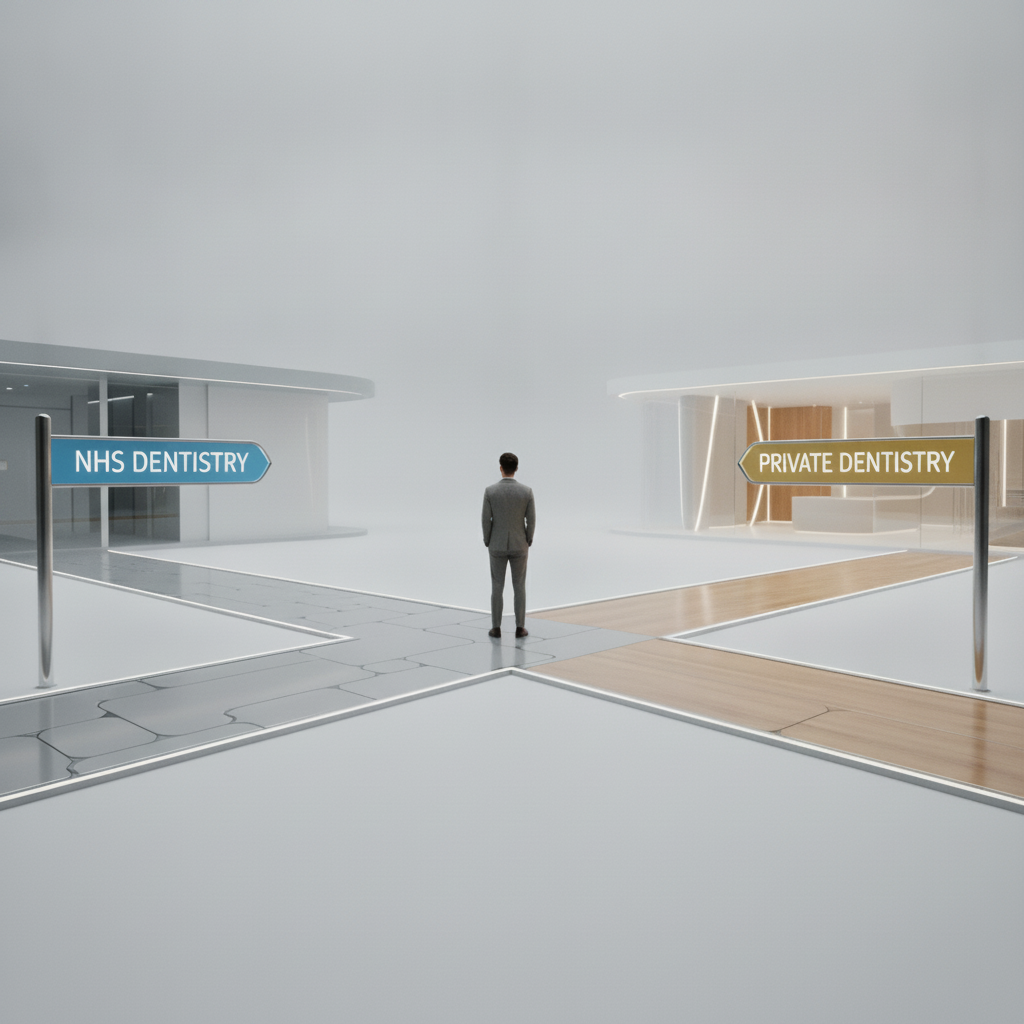
The choice between NHS and private dentistry ultimately boils down to your personal priorities. If your primary concern is affordability and you only require essential treatments to maintain basic oral health, the NHS offers a valuable and cost-effective solution. However, be prepared for potential waiting lists and a limited choice in terms of materials and aesthetic outcomes.
If, on the other hand, you prioritise speed of access, a wider range of treatment options including cosmetic enhancements, advanced technology, and a more personalised experience, then private dentistry is likely to be a better fit, provided you are willing to invest financially. Many people opt for a hybrid approach, using the NHS for routine check-ups if they can find a local dentist, but turning to private practices for specific treatments like cosmetic work or dental implants.
Before making a decision, consider the following:
- Assess Your Needs: What kind of dental care do you primarily require? Is it routine maintenance, urgent repair, or aesthetic improvement?
- Budget Constraints: How much are you willing and able to spend on your dental care? Explore payment plans if considering private options.
- Accessibility: Are there NHS dentists accepting new patients in your area, and what are their typical waiting times?
- Long-Term Goals: Are you looking for a long-term dental partner, or just a quick fix? Private practices often foster stronger patient-dentist relationships.
For more detailed information on dentistry in the UK, a helpful resource can be found on Wikipedia’s page on Dentistry in the United Kingdom, which provides an overview of the dental landscape. Consulting with a local dental professional from both an NHS and a private practice can also provide clarity on the options available to you and help tailor a treatment plan that aligns with your specific requirements.