Calculus Bridge on Teeth: What It Is and How It Is Removed
What a calculus bridge is, why it matters for your gums and how it is removed.
Checked by our editors.
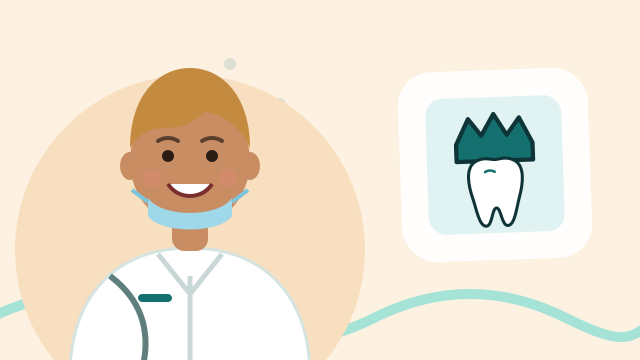
A calculus bridge on teeth is a heavy build-up of tartar (hardened plaque) that spreads along several teeth, usually near the gumline. Cleveland Clinic says tartar cannot be removed by brushing and flossing; a dentist or hygienist has to clean it off, and leaving it can lead to gum disease.

Despite the name, a calculus bridge has nothing to do with a dental bridge that replaces a missing tooth. It is simply what people call tartar when it has built up enough to look like a continuous band across several teeth. Here is what it is, why it matters and what to do about it.
What is dental calculus?
Cleveland Clinic describes tartar, or dental calculus, as hardened plaque that can form both above and below the gumline. It is mostly mineralised bacteria, with minerals such as calcium phosphate, calcium carbonate and magnesium phosphate. Plaque turns into tartar when it is not removed by regular brushing and cleaning between teeth.
What does a calculus bridge look like?
- a hard, rough deposit you can feel with your tongue
- yellowish at first, darkening over time; Cleveland Clinic says coffee, tea, red wine and tobacco can make it look brown or black
- often concentrated along the gumline
- gums nearby may look red or swollen, or bleed
Why is a calculus bridge a problem?
According to Cleveland Clinic, untreated tartar can lead to gingivitis and gum disease, gum recession, cavities, bad breath and staining. Tartar below the gumline cannot be reached with a toothbrush and may need gum disease treatment such as scaling and root planing. The NHS explains that gum disease is caused by a build-up of plaque and can eventually lead to shrinking gums and loose or lost teeth.

That matters for anyone thinking about future implants, crowns or bridges, because healthy gums are a starting requirement. Cleveland Clinic lists active gum disease and poor oral hygiene among the factors that can make implants unsuitable.
Can I remove a calculus bridge at home?
No. Cleveland Clinic says brushing and flossing alone cannot remove tartar, and trying to scrape it off yourself can damage your teeth and gums. Removal is done by a dentist or dental hygienist using special instruments.
How is it removed on the NHS?
| Treatment | NHS band (England) | Charge |
|---|---|---|
| Simple scaling, with an examination | Band 1 | £27.90 |
| More extensive gum disease treatment | Band 2 | £76.60 |
The NHS notes that if scaling is not clinically necessary, you would pay for it privately. Heavy build-up may need more than one visit.
What happens at the cleaning appointment?
Cleveland Clinic explains that a dentist or hygienist removes tartar with special instruments during a professional cleaning. Where tartar has spread below the gumline, deeper cleaning such as scaling and root planing may be needed. Cleveland Clinic says there is no downtime after scaling and root planing. The Oral Health Foundation adds that the dental team will show you how to clean your teeth and gums at home and recommend suitable tools, which is the part that stops the problem recurring.
How do I stop it coming back?
- Brush at least twice a day with fluoride toothpaste, and spit rather than rinse, as the NHS advises.
- Clean between your teeth every day with floss or interdental brushes.
- Use a soft-bristled brush, as Cleveland Clinic recommends, and take care to reach the gumline.
- Avoid smoking and tobacco, which Cleveland Clinic links with tartar staining and gum problems.
- Keep the check-up and hygiene interval your dentist recommends.
For the bigger picture on gums, see our guide what is gum disease and how is it treated, and our article on why flossing matters.
Sources
- Cleveland Clinic, Tartar on Teeth (Dental Calculus)
- NHS, Gum disease
- NHS, What is included in each NHS dental band charge?
- NHS, Understanding NHS dental charges
- Oral Health Foundation, Gum disease
- Cleveland Clinic, Gum Disease Treatment
- Cleveland Clinic, Dental Implants
This article is general information and is not a substitute for advice from your own dentist.