Dental Bridges vs Implants UK
Dental Bridges vs Implants UK
Losing a tooth can significantly impact not only your oral health but also your confidence and quality of life. Fortunately, modern dentistry offers highly effective solutions to restore your smile and chewing function. When considering options for tooth replacement in the UK, two of the most prominent choices are dental bridges and dental implants. While both serve the fundamental purpose of filling gaps left by missing teeth, they differ significantly in their approach, longevity, impact on adjacent teeth, and overall benefits. Understanding these distinctions is crucial for making an informed decision about the best treatment path for your individual needs.
Understanding Dental Bridges
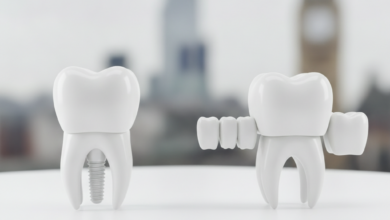
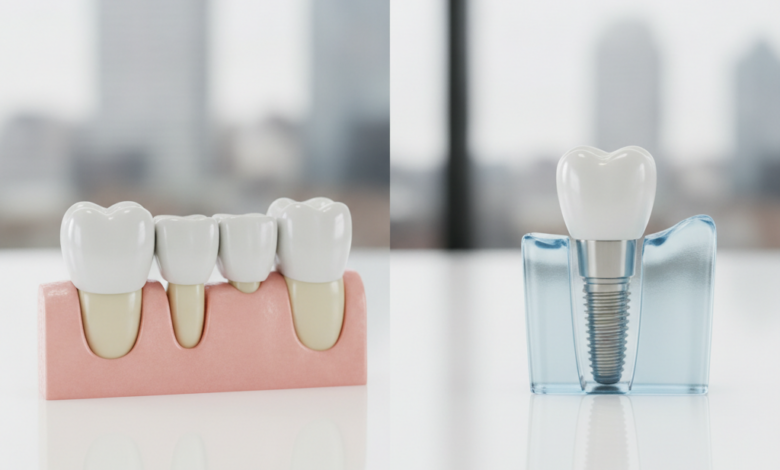
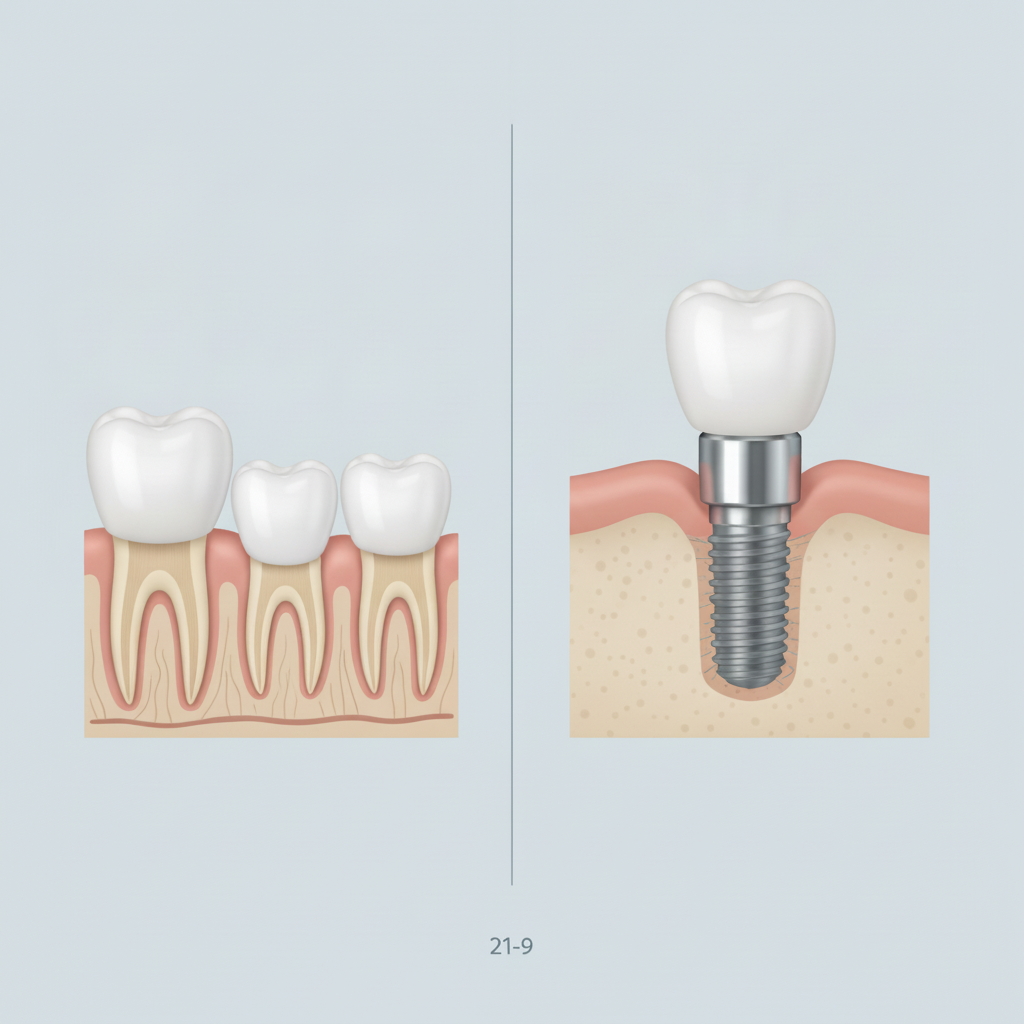
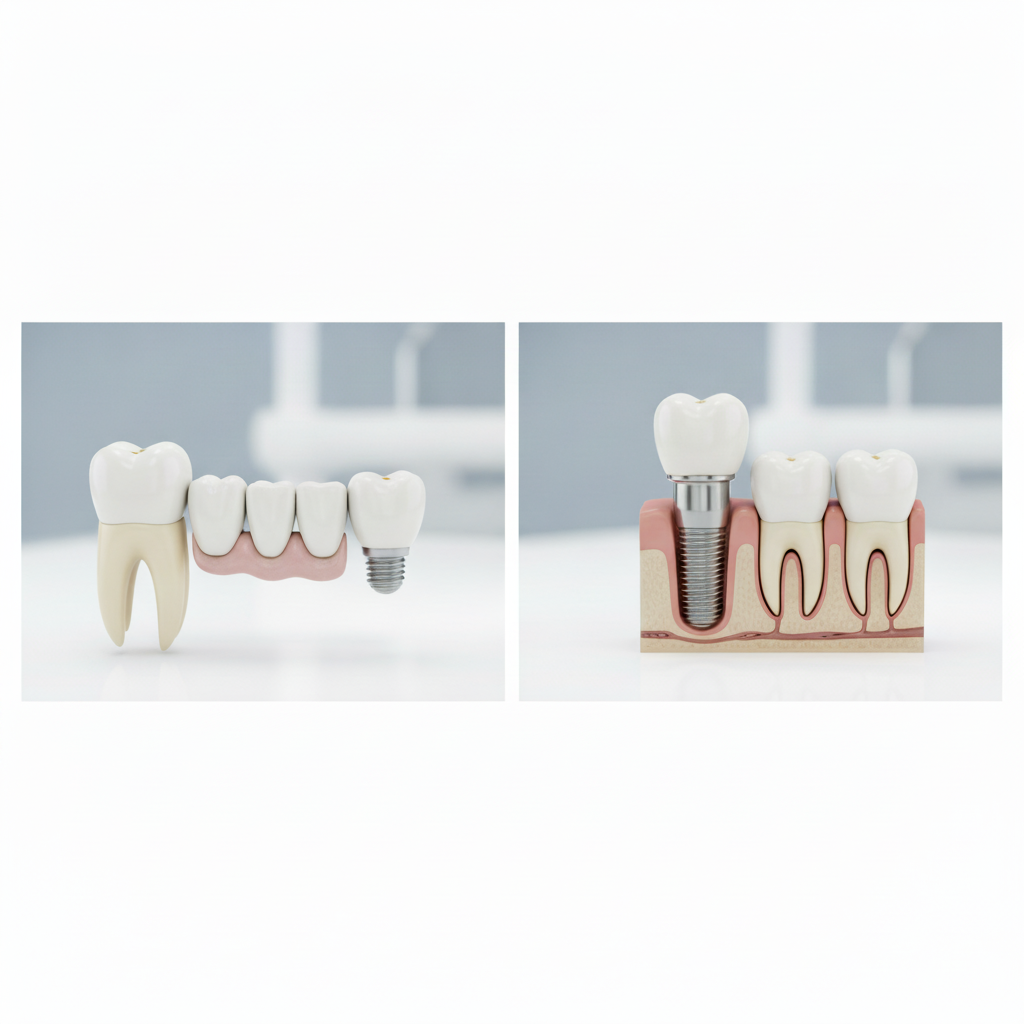
A dental bridge is a fixed prosthetic device used to replace one or more missing teeth by “bridging” the gap between existing natural teeth or implants. It typically consists of one or more artificial teeth (pontics) held in place by dental crowns cemented onto the natural teeth on either side of the gap. These adjacent teeth, called abutment teeth, are prepared by filing them down to allow the crowns to fit over them securely.
There are several types of dental bridges:
- Traditional Bridges: These are the most common type and involve creating a crown for the tooth or implant on either side of the missing tooth, with a pontic in between.
- Cantilever Bridges: Used when there are adjacent teeth on only one side of the missing tooth. This is less common today due to potential strain on the single abutment tooth.
- Maryland Bonded Bridges (Resin-Bonded Bridges): These use a metal or porcelain framework bonded to the back of the adjacent teeth with resin cement, rather than crowns. They are more conservative as less enamel is removed from abutment teeth.
The procedure for a traditional dental bridge typically involves two appointments. During the first visit, the abutment teeth are prepared, impressions are taken, and a temporary bridge is placed. In the second visit, the permanent bridge is fitted and cemented into place after ensuring proper fit and bite.
Advantages of Dental Bridges:
- Faster treatment timeline compared to implants.
- Generally less invasive than implant surgery.
- Can be a good option if adjacent teeth already require crowns.
- Offers a fixed solution, unlike removable dentures.
Disadvantages of Dental Bridges:
- Requires reduction of healthy adjacent teeth, potentially compromising their long-term health.
- Does not prevent bone loss in the area of the missing tooth, as there is no root stimulation.
- Can be more challenging to clean thoroughly, potentially leading to decay in abutment teeth.
- Average lifespan is typically 5-15 years, requiring eventual replacement.
- Potential for abutment teeth to fail due to increased stress.
Understanding Dental Implants
Dental implants represent a more advanced and comprehensive solution for tooth replacement. An implant consists of a small, screw-shaped post, typically made of titanium, which is surgically placed into the jawbone where the tooth is missing. This post acts as an artificial tooth root. Over several months, the implant fuses with the jawbone through a process called osseointegration, providing an incredibly strong and stable foundation. Once osseointegration is complete, an abutment (a connector) is attached to the implant, and a custom-made crown is placed on top.
Dental implants can replace a single tooth, multiple teeth, or even provide support for full arch bridges or dentures.
The procedure for dental implants involves several stages:
- Initial Consultation and Planning: A thorough examination, including X-rays and 3D scans, to assess bone quality and density and plan the implant placement.
- Implant Placement Surgery: The titanium post is surgically inserted into the jawbone. This is typically performed under local anaesthesia.
- Osseointegration: A healing period of 3-6 months follows, during which the implant integrates with the bone.
- Abutment Placement: Once osseointegration is complete, a small connector (abutment) is attached to the implant. In some cases, this may be placed during the initial surgery.
- Crown Placement: A custom-made porcelain or ceramic crown is fabricated to match your natural teeth and is then securely placed onto the abutment.
Advantages of Dental Implants:
- Preserves healthy adjacent teeth as they are not altered.
- Prevents bone loss by stimulating the jawbone, similar to a natural tooth root.
- Offers superior stability, comfort, and function, feeling most like a natural tooth.
- High success rates and excellent long-term prognosis, often lasting 20 years or more, frequently a lifetime with proper care.
- Easy to clean and maintain, similar to natural teeth.
- High aesthetic appeal, blending seamlessly with natural teeth.
Disadvantages of Dental Implants:
- Longer overall treatment timeline due to the osseointegration period.
- More invasive surgical procedure.
- Higher initial cost compared to a traditional bridge.
- Requires sufficient bone density; bone grafting may be necessary if bone volume is inadequate.
- Not suitable for all patients, especially those with certain medical conditions or who are heavy smokers.
Dental Bridges vs Implants UK: A Detailed Comparison
When considering Dental Bridges vs Implants UK, it’s essential to evaluate various factors beyond just the initial procedure. The choice often comes down to a balance of longevity, impact on oral health, aesthetics, cost, and personal circumstances. While bridges offer a quicker fix, implants generally provide a more durable and health-preserving solution in the long run.
Here is a detailed comparison to help highlight the differences:
| Feature | Dental Bridge | Dental Implant |
|---|---|---|
| Procedure Invasiveness | Less invasive; involves preparing adjacent teeth. | More invasive; requires surgical placement into jawbone. |
| Treatment Timeline | Typically 2-3 weeks (2 appointments). | Several months (3-9 months), including healing and osseointegration. |
| Impact on Adjacent Teeth | Requires grinding down healthy adjacent teeth to support crowns. | Does not affect adjacent healthy teeth; stands alone. |
| Bone Health Preservation | Does not stimulate jawbone, leading to potential bone loss over time. | Stimulates jawbone, preventing bone loss and preserving facial structure. |
| Longevity | Typically 5-15 years, requiring eventual replacement. | Often 20+ years, frequently a lifetime with proper care. |
| Maintenance & Hygiene | More challenging to clean under the pontic; requires special flossing tools. | Can be cleaned like natural teeth with regular brushing and flossing. |
| Stability & Function | Good stability, but less secure than implants. | Excellent stability and natural chewing function. |
| Aesthetics | Good, but bone loss can sometimes create a visible gap under the pontic. | Superior aesthetics, blending seamlessly with natural teeth. |
| Cost (Initial) | Generally lower initial cost per tooth. | Higher initial cost per tooth. |
| Reversibility | Irreversible damage to abutment teeth once prepared. | Can be removed if necessary, but rarely. Bone integration is a permanent change. |
Which Option is Right for You? Factors to Consider
Choosing between a dental bridge and a dental implant involves a personalized assessment. Your dentist in the UK will consider various factors to recommend the most suitable option:
- Number of Missing Teeth: For a single missing tooth, both are options. For multiple adjacent missing teeth, an implant-supported bridge or multiple individual implants might be considered.
- Overall Oral Health: Implants require healthy gums and sufficient jawbone. If you have periodontal disease or significant bone loss, these issues may need to be addressed first.
- Health of Adjacent Teeth: If the teeth surrounding the gap are already heavily restored or require crowns, a bridge might be a practical solution as it utilises existing necessary work. If they are perfectly healthy, implants are preferable to avoid altering them.
- Bone Density: Implants depend on adequate bone volume and density for successful osseointegration. Patients with insufficient bone may require a bone graft, adding to the treatment time and cost.
- Budget: While bridges typically have a lower upfront cost, their shorter lifespan and potential need for future replacements can make them more expensive in the long run. Implants, though a larger initial investment, often prove more cost-effective over a lifetime due to their durability.
- Treatment Timeline: If you need a quick solution, a bridge offers a faster completion. Implants require patience due to the healing and osseointegration periods.
- Personal Preference and Lifestyle: Some patients prefer a non-surgical option, while others prioritise the natural feel and longevity of implants. Habits like heavy smoking can affect implant success rates.
The Procedure in the UK: What to Expect
Regardless of whether you choose a bridge or an implant, the process always begins with a comprehensive consultation. Your dental professional will conduct a thorough examination, including digital imaging, to assess your oral health, discuss your goals, and determine your suitability for each procedure. They will outline the treatment plan, expected outcomes, and associated costs.
For dental implants, the expertise of the dental team is paramount. The surgical placement of the titanium post requires precision and experience. Post-operative care for both procedures is crucial for success. For implants, this involves meticulous oral hygiene during the osseointegration phase and regular check-ups. For bridges, it involves careful cleaning to prevent decay under the pontic and around the abutment teeth.
Choosing a reputable clinic with experienced dentists and access to advanced technology is vital for successful outcomes in the UK. They can guide you through every step, ensuring comfort and optimal results. The long-term success of either treatment relies heavily on good oral hygiene and regular dental check-ups. Maintaining excellent oral health is always the best defence against future dental issues, whether you have natural teeth, bridges, or implants. For more details on maintaining oral health with dental prosthetics, you can visit resources like Wikipedia’s page on Dental Implants.
Conclusion
Both dental bridges and dental implants are highly effective solutions for replacing missing teeth, each with its own set of advantages and considerations. Dental bridges offer a quicker and generally less invasive option, which can be ideal for patients whose adjacent teeth are already compromised or who have significant bone loss making implants difficult without additional procedures. However, they require the alteration of healthy teeth and do not prevent jawbone deterioration.
Dental implants, while requiring a longer treatment period and a surgical procedure, provide a superior long-term solution. They preserve the integrity of adjacent teeth, stimulate the jawbone to prevent bone loss, and offer exceptional stability, comfort, and aesthetics that closely mimic natural teeth. Their durability often makes them a more cost-effective choice over a lifetime.
Ultimately, the decision between a dental bridge and a dental implant should be made in consultation with a qualified dental professional. They can assess your specific oral health needs, discuss your preferences, and help you select the treatment that will best restore your smile, function, and overall oral health. If you’re considering your options, a consultation is the essential first step towards a confident and healthy future. You can learn more about comprehensive dental solutions by exploring dental implants.