How Often Should You Visit a Dentist in the UK?

How Often Should You Visit a Dentist in the UK? This question often receives a standard, almost automatic response: every six months. For decades, this twice-yearly schedule has been ingrained in public consciousness as the gold standard for maintaining oral health. However, modern dental science and official UK guidelines suggest a more nuanced and personalised approach. While the six-month rule serves as a useful benchmark, the optimal frequency for your dental check-ups depends on a variety of individual risk factors, your current oral health status, and your medical history.
The idea isn’t to simply visit less often, but to visit as often as is clinically necessary for you. For some individuals, a visit every six months is perfect. For others with excellent oral hygiene and no history of problems, an annual or even 24-month recall might be sufficient. Conversely, for those with ongoing issues like gum disease, a history of frequent decay, or certain medical conditions, more frequent visits every three to four months may be required to maintain stability and prevent further complications. Understanding the reasoning behind your recommended schedule is key to taking control of your oral health and ensuring you receive the right level of care at the right time.
The Traditional Six-Month Rule: Where Did It Come From?
The origin of the twice-a-year dental visit is more rooted in marketing and public health campaigns than in hard scientific evidence. Many trace its popularisation back to early 20th-century advertising for toothpaste brands, which promoted the six-month check-up as an easy-to-remember rule of thumb. It was a simple, effective message that helped establish a routine of preventative care at a time when dentistry was often associated only with pain and tooth extraction. The practice gained further traction and was adopted by many dental professionals and insurance companies as a standard for preventative care coverage.
There is undeniable merit to this traditional schedule. It creates a consistent routine, ensuring that patients are seen by a professional at regular intervals. For a significant portion of the population, this frequency is effective at catching developing problems like cavities or gingivitis before they become severe. It allows for regular professional cleanings to remove calculus (hardened plaque) that cannot be removed by brushing and flossing alone. However, the one-size-fits-all approach has been challenged by modern, evidence-based dentistry, which advocates for care tailored specifically to the patient’s individual needs.
The Modern Risk-Based Approach in the UK
In the United Kingdom, dental care guidelines are heavily influenced by the National Institute for Health and Care Excellence (NICE). Recognising the limitations of a rigid six-month schedule, NICE has published guidelines that recommend a risk-based recall interval. This means your dentist should conduct a thorough assessment of your oral health and personal risk factors to determine the most appropriate time for your next check-up. According to these guidelines, the interval for an adult can range from as short as three months to as long as two years. For children and adolescents, the recommended interval is between three and twelve months. This personalised approach ensures that healthcare resources are used effectively and that patients receive a level of care that is truly appropriate for their situation. A general overview of this evidence-based practice can be found in resources discussing the Dental check-up, which often cite guidelines from bodies like NICE.
Factors Influencing Your Dental Check-Up Frequency
Your dentist will consider a comprehensive set of factors when deciding on your personalised recall interval. This assessment is a critical part of your initial and ongoing care.
- Oral Hygiene and Habits: The quality of your daily cleaning routine is paramount. A patient who brushes twice a day with fluoride toothpaste, flosses daily, and maintains a low-sugar diet is at a much lower risk of cavities and gum disease than someone with inconsistent habits.
- Clinical History: Your dental past is a strong predictor of your dental future. If you have a history of rapid cavity formation, recurrent gum disease (periodontitis), or multiple crowns and fillings, your dentist will want to monitor you more closely.
- Gum Health: The condition of your gums is a major factor. Early gum disease (gingivitis) can often be reversed with professional cleaning and improved home care, but more advanced periodontitis requires more frequent visits for deep cleaning and monitoring of periodontal pockets.
- Systemic Health Conditions: Your overall health is intrinsically linked to your oral health. Conditions such as diabetes can increase the risk of gum disease and slow healing. Autoimmune disorders, osteoporosis, and treatments like chemotherapy can all have significant impacts on oral tissues, necessitating more frequent professional oversight.
- Lifestyle Choices: Habits like smoking or high alcohol consumption dramatically increase the risk for gum disease and oral cancer. Similarly, a diet high in sugar and acidic foods increases the risk of tooth decay.
Why It’s Crucial to Regularly Visit a Dentist
Regardless of the specific frequency, the importance of regular, professional dental care cannot be overstated. These visits are far more than a simple “check and polish”; they are a cornerstone of preventative healthcare that impacts your entire body. Proactive check-ups help you avoid pain, complex procedures, and higher costs in the long run.
Professional Cleaning and Plaque Removal
Even with the most diligent brushing and flossing, it is nearly impossible to remove all plaque. This sticky film of bacteria constantly forms on your teeth. If not removed, it absorbs minerals from your saliva and hardens into a substance called calculus, or tartar. Calculus cannot be removed with a toothbrush and provides a rough surface for even more plaque to accumulate, leading to gum inflammation. During a professional cleaning, a dentist or hygienist uses specialised tools to carefully remove this calculus from above and below the gumline, preventing the progression to more serious gum disease.
Early Detection of Serious Oral Health Issues
Many serious dental problems develop slowly and without obvious symptoms in their early stages. Regular check-ups allow your dentist to identify these issues when they are smaller, simpler, and less expensive to treat. This includes finding small cavities before they reach the nerve and require root canal treatment, or identifying early signs of gum disease before it leads to bone and tooth loss. Furthermore, dentists perform a vital screening for oral cancer at every check-up, examining the tongue, cheeks, palate, and other soft tissues for any abnormalities. A consistent check-up schedule ensures that minor issues with existing fillings or crowns are spotted before they fail and lead to a more significant problem, such as a severe toothache. Understanding what causes toothache and how dentists treat it highlights the importance of catching problems before they escalate to this painful stage.
Identifying Systemic Health Problems
The mouth is often described as the window to the body, and for good reason. Your dentist may be the first healthcare professional to spot the signs of a systemic health condition. For example, persistent gum disease can be an indicator of undiagnosed diabetes. Pale gums might suggest anaemia, while the erosion of tooth enamel in a specific pattern could be a sign of acid reflux disease (GERD). By identifying these oral manifestations, your dentist can advise you to see your general practitioner for further investigation, playing a crucial role in your overall health management.
Recommended Frequencies for Different Groups
To better illustrate the risk-based approach, it’s helpful to see how recall intervals can vary based on a patient’s profile. The following table provides a general guideline for different risk categories.
| Patient Profile | Recommended Recall Interval | Key Focus Areas |
|---|---|---|
| Low-Risk Adult | 12 to 24 months | General maintenance, preventative advice, oral cancer screening, and basic cleaning. |
| Moderate to High-Risk Adult (e.g., smoker, history of gum disease) | 3 to 6 months | Intensive cleaning, monitoring periodontal pocket depths, decay prevention, and targeted advice. |
| Children & Teenagers | 6 to 12 months | Monitoring tooth eruption and jaw development, orthodontic assessment, applying fluoride varnishes and fissure sealants. |
| Patients with Complex Restorations (e.g., implants, bridges) | 6 to 12 months | Assessing the stability and health around implants, checking the integrity of crowns and bridges, ensuring proper hygiene. |
| Patients with Systemic Conditions (e.g., Diabetes) | 3 to 6 months | Vigilant monitoring of gum health, proactive management of inflammation, and infection control. |
What to Expect During a Routine Dental Visit
A routine dental appointment typically consists of two main components: the examination and the professional cleaning.
The Dental Examination (Check-Up)
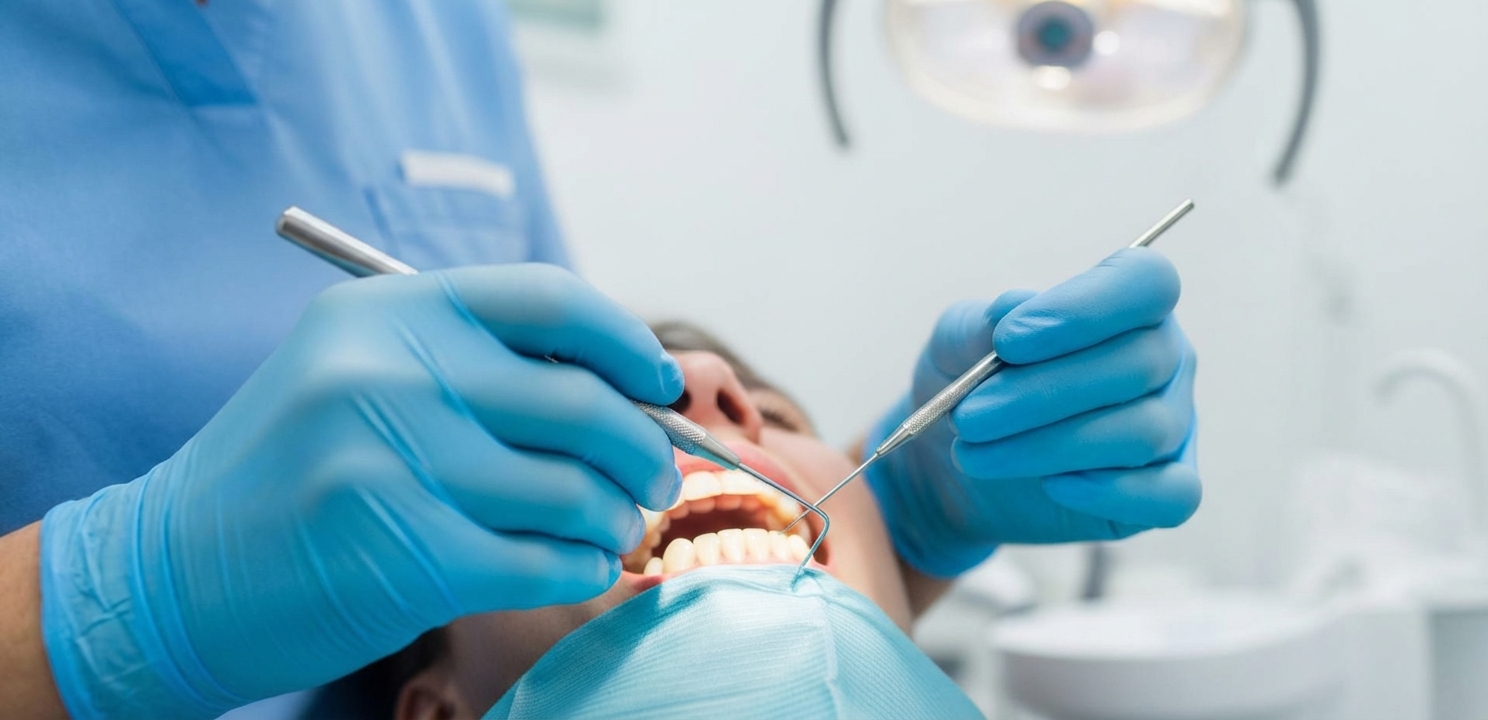
During the check-up, your dentist will perform a thorough evaluation of your entire oral cavity. This includes a visual inspection of each tooth to look for signs of decay, wear, or cracks. They will examine your gums for signs of inflammation, bleeding, and recession. Using a small instrument called a periodontal probe, they will gently measure the depth of the pockets between your teeth and gums to screen for periodontitis. The examination also includes checking your bite (occlusion) and the function of your jaw joint, as well as the crucial oral cancer screening of your soft tissues. Depending on your risk factors and the time since your last set of images, your dentist may recommend taking dental X-rays (radiographs) to see what is happening in areas not visible to the naked eye, such as between the teeth, under fillings, and within the jawbone.
The Professional Cleaning (Scale and Polish)
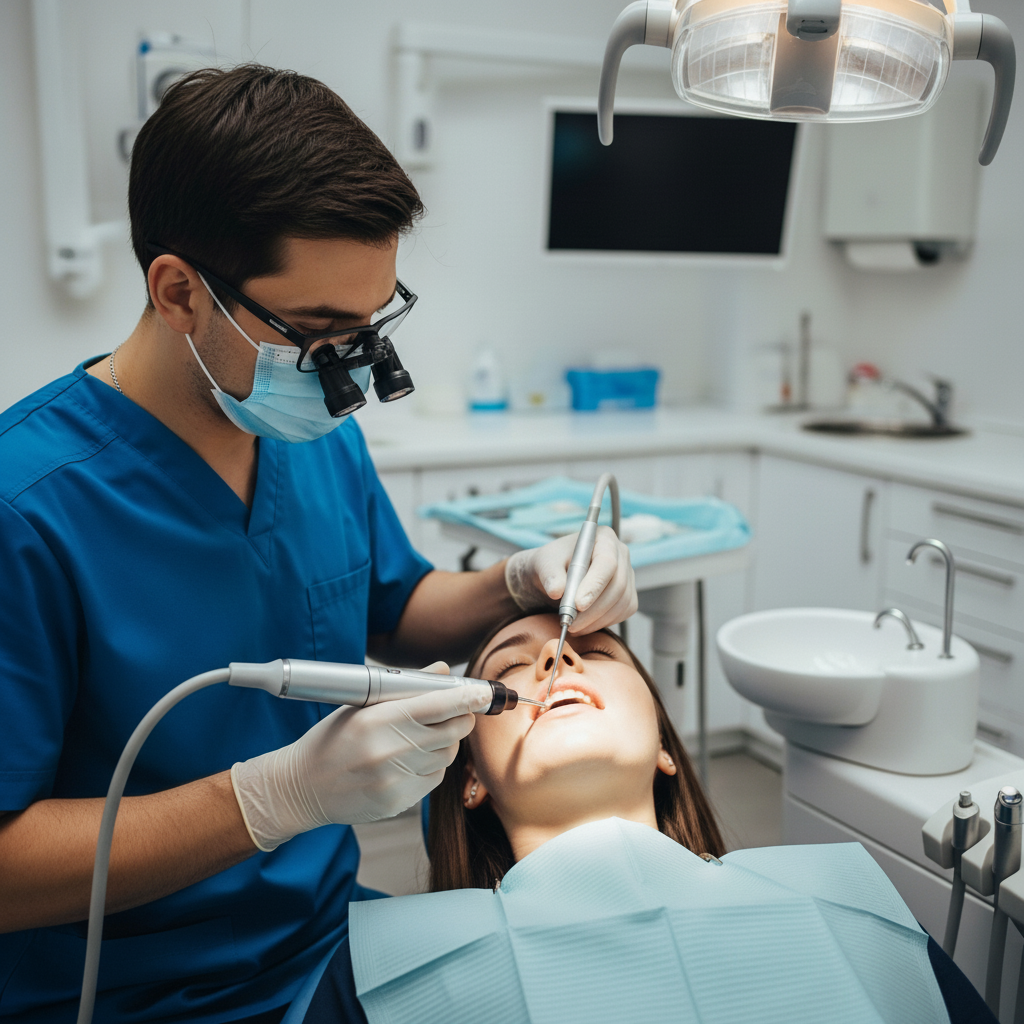
The second part of the visit is the professional cleaning, often referred to as a scale and polish. The “scaling” process involves the meticulous removal of plaque and hardened calculus (tartar) from the tooth surfaces. This is done with either ultrasonic instruments, which use vibrations to break up deposits, or fine hand-held scalers. Once the surfaces are clean, they are “polished.” Polishing uses a slow-speed handpiece with a soft rubber cup and a special paste to smooth the tooth surfaces. This not only removes surface stains, leaving your teeth feeling smooth and bright, but it also makes it more difficult for new plaque to adhere, helping to keep your teeth cleaner for longer. At the end of your visit, your dentist or hygienist will provide personalised advice on how to best maintain your oral health at home based on their findings.